
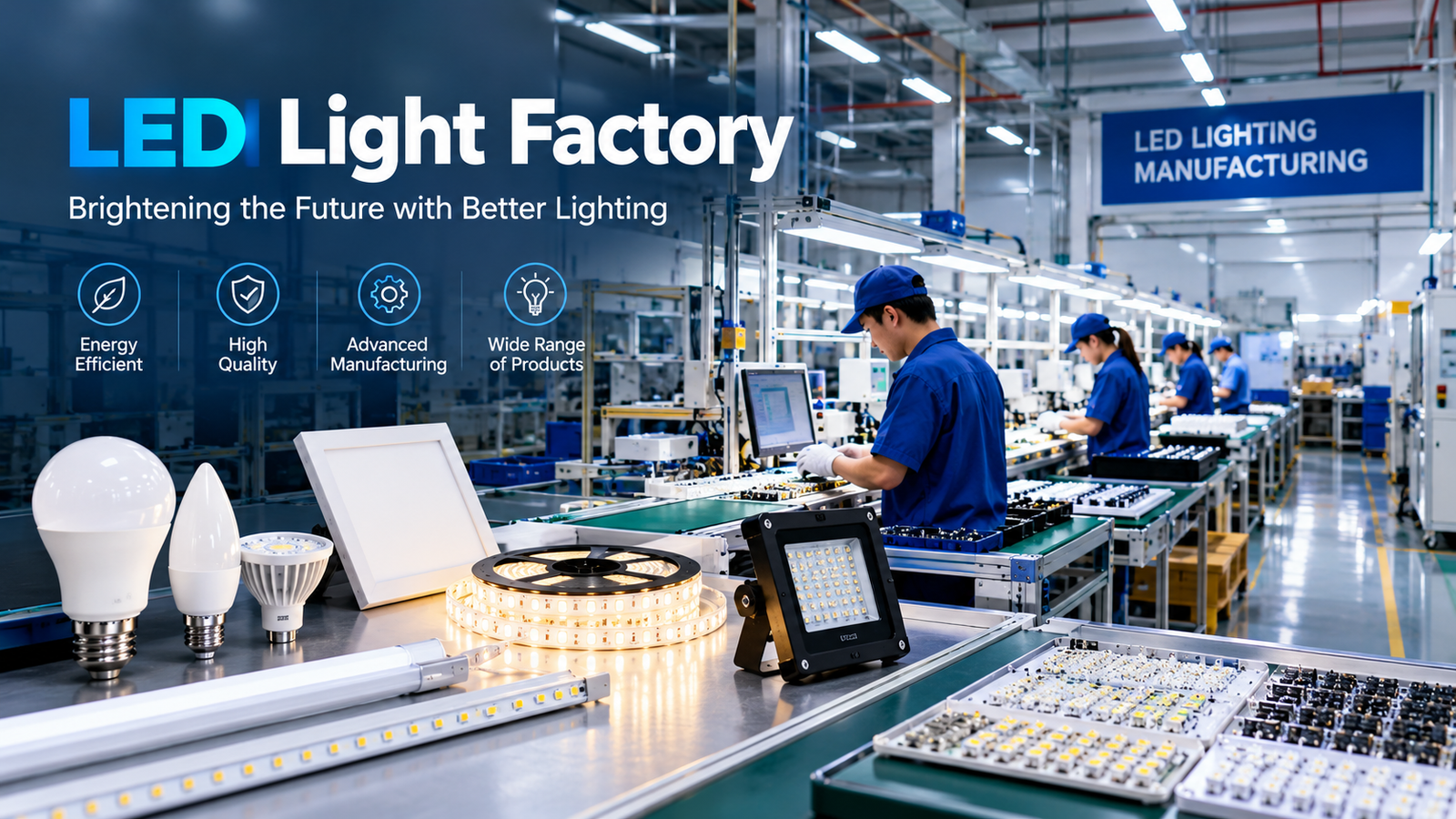
Introduction to an LED Light Factory
An LED light factory plays an important role in the lighting industry by producing energy-efficient lighting products for homes, offices, factories, shops, and outdoor spaces. As the demand for modern lighting continues to grow, manufacturers are focusing on developing products that offer better brightness, longer service life, and lower electricity consumption. From simple LED bulbs to decorative strip lights and industrial lighting systems, these factories produce a wide range of solutions for different customer needs.
When people hear the term LED light factory, they often imagine a large industrial building filled with machines assembling bulbs and lights. While that is partly true, the manufacturing process involves much more than assembly alone. Product design, electronic components, quality testing, packaging, and supply chain management all contribute to the final product. Every stage matters because even a small problem in an electrical component can affect the performance of the finished light.
For retailers, wholesalers, contractors, and business owners, understanding how an LED light factory operates can make purchasing decisions easier. Instead of focusing only on the lowest price, buyers can compare manufacturing standards, product specifications, customization options, and quality control procedures. This approach helps businesses find lighting products that meet their requirements without compromising reliability.
What Does an LED Light Factory Do?
An LED light factory is a manufacturing facility that designs, assembles, tests, or produces LED lighting products. Some factories manufacture complete lighting systems, while others specialize in particular categories such as LED bulbs, panel lights, floodlights, tube lights, streetlights, or LED strip lights. The type of equipment, workforce, and production process depends on the products the factory intends to supply.
Many factories receive electronic components and raw materials from different suppliers before assembling them into finished products. These materials may include LED chips, circuit boards, aluminum housings, plastic covers, drivers, connectors, and heat-dissipating components. Depending on the manufacturer’s capabilities, certain components may be produced in-house, while others are purchased from specialized suppliers. This is why two factories selling similar products can have quite different production processes.
An experienced LED light factory also works on improving product performance and manufacturing efficiency. Engineers may adjust circuit designs, improve thermal management, or select better materials to reduce failure rates. At the same time, production teams try to minimize waste and maintain consistent quality across large orders. The goal is not simply to produce more lights, but to deliver products that perform reliably under their intended operating conditions.
The LED Light Manufacturing Process
The manufacturing process generally begins with product planning and component selection. Engineers determine the required brightness, color temperature, electrical specifications, housing design, and intended application. For example, an LED bulb designed for residential use has different requirements from a high-power floodlight used in a warehouse or outdoor facility. Selecting suitable components at the beginning helps prevent performance issues later.
The next stage involves assembling the electronic components and physical housing. In many modern facilities, surface-mount technology machines place tiny electronic components onto printed circuit boards with a high degree of precision. LED packages, drivers, and other parts are then integrated according to the product design. Some factories use automated assembly lines, while others rely on a combination of machines and skilled workers, especially for specialized or lower-volume products.
After assembly, the products go through inspection and testing before packaging. Depending on the product category, testing may include checking electrical safety, light output, color consistency, temperature, and basic operating performance. Manufacturers may also conduct durability tests or sample products for longer-term evaluation. Once the products meet the relevant acceptance criteria, they are labeled, packed, and prepared for shipment. A well-organized production process helps reduce defects and ensures that customers receive products matching the agreed specifications.
Types of Products Made by an LED Light Factory
LED bulb manufacturing is one of the most familiar parts of the lighting industry. These bulbs are commonly used in homes, offices, hotels, shops, and other indoor environments. They are available in different wattages, shapes, base types, and color temperatures to suit various fixtures and lighting preferences. A reliable manufacturer pays attention to heat management, driver quality, and electrical compatibility because these factors can strongly influence bulb performance.
LED panel lights and tube lights are widely used in offices, schools, hospitals, commercial buildings, and retail spaces. Panel lights provide broad, relatively uniform illumination, making them suitable for ceiling installations and work environments. Tube lights are often used to replace older fluorescent systems, although compatibility with existing fixtures and electrical components must be checked before installation. Factories producing these products need to focus on consistent light distribution, appropriate glare control, and reliable electrical design.
Other factories specialize in LED strip lights, streetlights, floodlights, high-bay lights, and decorative lighting products. LED strips are popular for interior decoration, signage, furniture, and architectural accents, while industrial high-bay fixtures are designed for spaces with high ceilings. Outdoor products require suitable protection against moisture, dust, and environmental exposure. Since these applications have different demands, buyers should choose a factory that understands the particular product category they need rather than assuming every manufacturer offers the same level of expertise.
Why Quality Control Matters in an LED Light Factory
Quality control is one of the most important parts of LED lighting production. A product may look attractive and provide strong brightness when switched on, but that does not automatically mean it will perform well over time. Poorly designed drivers, inadequate heat dissipation, weak solder joints, and low-quality components can cause flickering, color changes, premature failure, or other problems. Reliable manufacturers try to identify these issues before products leave the factory.
Testing procedures vary according to product type and applicable standards. Common checks include electrical performance, power consumption, light output, color temperature, color rendering, and operating temperature. For outdoor or industrial lighting, additional assessments may be required to verify ingress protection, mechanical strength, or performance under specific environmental conditions. Not every product needs the same testing program, so the manufacturer’s procedures should match the product’s intended use.
Documentation is equally important when evaluating quality. Buyers can ask for product specifications, applicable test reports, compliance documents, warranty terms, and information about the components used. If a factory claims that its products meet a particular safety or performance standard, the supporting documentation should relate to the actual model being purchased. A professional approach to quality control protects the manufacturer and the customer by reducing avoidable defects, complaints, and costly replacements.
Benefits of Working With a Professional LED Light Factory
One major advantage of working directly with an LED light factory is access to a broader range of product options. Depending on the manufacturer’s capabilities, customers may be able to select different wattages, housing materials, color temperatures, packaging styles, and electrical configurations. This can be particularly useful for distributors and businesses that want products tailored to their local market instead of relying entirely on standard retail models.
Another benefit is the opportunity to establish more consistent supply arrangements. Businesses that purchase lighting products regularly need dependable lead times, stable specifications, and clear communication about order quantities. A professional factory can help buyers plan repeat orders and maintain consistency between shipments. However, this depends on the factory’s actual production capacity, inventory management, and supplier relationships, so these factors should be evaluated before entering a long-term agreement.
Cost management is also an important consideration. Buying directly from a manufacturer may reduce certain intermediary costs, especially when purchasing in larger quantities. However, the lowest quoted price is not always the most economical option. Shipping, import duties, testing expenses, defective products, warranty claims, and minimum order requirements can all affect the final cost. A good purchasing decision considers the total cost of ownership rather than focusing only on the unit price.
How to Choose the Right LED Light Factory
Choosing the right LED light factory begins with understanding your own requirements. Before contacting manufacturers, decide which products you need, the quantity you expect to purchase, the target price range, and the technical specifications that matter most. A business buying LED bulbs for residential customers will have different priorities from a contractor sourcing industrial fixtures for a warehouse project. Clear requirements make it easier to compare suppliers fairly.
The next step is to evaluate the factory’s manufacturing experience and capabilities. Ask whether it produces the required products in-house, which processes are outsourced, and how it handles quality inspections. You can also request product samples, technical datasheets, and relevant certifications or test reports. If possible, inspect the facility or arrange an independent factory audit, particularly when placing a large order. A manufacturer’s website and product catalogue can provide useful information, but they are not a complete substitute for verification.
Communication and after-sales support should not be ignored either. A dependable supplier should answer technical questions clearly, explain its warranty policy, and provide realistic production timelines. Pay attention to how the factory responds when you ask about product failures, customization, or replacement procedures. If the supplier avoids basic questions or makes unrealistic promises, it is worth being cautious. Building a long-term relationship works best when both sides understand their responsibilities from the beginning.
Technology and Automation in Modern LED Light Factories
Technology has changed the way many LED light factories operate. Automated production equipment can place electronic components accurately, improve manufacturing speed, and reduce certain types of assembly errors. Computer-controlled systems also help manufacturers maintain consistent production settings across different batches. While automation can improve efficiency, its benefits still depend on proper machine maintenance, suitable materials, and effective quality management.
Modern factories may also use digital production tracking to monitor inventory, manufacturing schedules, inspection results, and order progress. These systems can help managers identify bottlenecks and respond more quickly when production problems occur. For buyers, better production management may translate into more predictable delivery times and improved communication about order status. Smaller factories may use simpler systems, but they can still deliver good results when their processes are organized and consistently monitored.
Product development is another area where technology makes a difference. Manufacturers can use optical simulation, thermal analysis, and electrical design tools to improve how lighting products distribute light and manage heat. Some companies are also developing smart LED products that support dimming, motion detection, scheduling, and wireless control. These features are becoming more common in commercial buildings and modern homes, although the additional electronics can increase product cost and complexity. The best solution depends on whether the customer genuinely needs these capabilities.
Sustainability and Energy Efficiency in LED Manufacturing
LED lighting is often associated with sustainability because LED products generally consume less electricity than traditional incandescent lighting for comparable lighting output. When used efficiently, they can help reduce the energy required to illuminate homes, offices, warehouses, and public spaces. Over the life of a lighting installation, lower electricity consumption may also reduce operating expenses, particularly in locations where lights remain switched on for many hours each day.
However, sustainable lighting involves more than energy consumption during use. An LED light factory also needs to consider material selection, manufacturing waste, packaging, transportation, and product lifespan. Better product design can reduce premature failures and limit the need for frequent replacements. Responsible manufacturers may also work on improving packaging efficiency, separating recyclable materials, and following applicable requirements for electronic waste and hazardous substances.
Buyers can support these efforts by choosing products that meet their actual lighting needs and are designed for repair or replacement where practical. Extremely cheap products that fail quickly can create unnecessary waste and additional costs. On the other hand, paying more for a product does not automatically make it environmentally responsible. Look for measurable evidence, such as product efficiency data, expected operating life under stated conditions, relevant environmental declarations, and clear end-of-life guidance.
Challenges Faced by LED Light Factories
Although demand for LED lighting has grown, manufacturers still face several challenges. Competition can be intense, particularly in standard product categories where many suppliers offer similar-looking items. This pressure may encourage some businesses to reduce prices aggressively, making it harder to invest in better components, testing equipment, employee training, and product development. Manufacturers must balance cost control with the need to maintain dependable performance.
Supply chain issues can also affect production. LED chips, electronic drivers, semiconductors, metal housings, and other components may come from different suppliers and regions. Delays or changes in component availability can disrupt production schedules and increase costs. A factory that depends too heavily on a single supplier may be especially vulnerable when materials become unavailable. Careful inventory planning and supplier management help reduce these risks, although they cannot eliminate every disruption.
Another challenge is meeting the different regulatory requirements of international markets. Products sold in one country may need additional testing, labeling, or documentation before they can be marketed elsewhere. Manufacturers serving export customers must understand the applicable rules and ensure their products meet the required specifications. This can involve extra time and expense, but compliance is essential for businesses that want to establish trust and avoid shipment delays or market restrictions.
The Future of the LED Light Factory Industry
The future of LED light manufacturing will likely involve continued improvements in efficiency, product reliability, and lighting control. As technology develops, manufacturers are working on products that offer better optical performance, improved thermal management, and more flexible installation options. New designs may also make it easier to integrate lighting with building management systems, occupancy sensors, and other smart technologies.
Customization is another area with strong potential. Commercial customers increasingly look for lighting that suits specific spaces, brand identities, and operating requirements. A factory may offer tailored fixture designs, different beam angles, custom color temperatures, or branded packaging depending on its equipment and production capabilities. These services can help businesses differentiate themselves, although customization may require higher minimum order quantities and longer development times.
At the same time, dependable manufacturing practices will remain essential. Customers will continue to expect consistent product quality, transparent specifications, reasonable pricing, and reliable after-sales support. Factories that invest in skilled workers, effective quality control, and practical innovation will be better positioned to serve changing customer needs. The industry will not be shaped by technology alone, but also by how well manufacturers understand their markets and deliver products that work as promised.
Conclusion
An LED light factory is much more than a place where lighting products are assembled. It combines engineering, component sourcing, manufacturing, quality control, and distribution to deliver lighting solutions for a wide range of applications. From everyday bulbs and office panels to industrial fixtures and decorative LED strips, each product requires the right balance of design, materials, and testing.
For businesses looking to purchase LED lighting, choosing the right manufacturer can make a significant difference in product performance and long-term value. Comparing specifications, checking samples, reviewing relevant documentation, and understanding warranty conditions are practical steps that help reduce purchasing risks. It is also worth looking beyond the quoted price and considering delivery reliability, customization options, and after-sales service.
As the lighting industry continues to evolve, LED light factories will have new opportunities to improve production and develop smarter, more efficient products. For buyers, the most important thing is to work with a manufacturer that understands their requirements and can demonstrate its ability to meet them. A well-chosen supplier can become a valuable business partner, helping deliver reliable lighting solutions while supporting long-term growth.
One thought on “LED Light Factory: How Modern LED Lighting Is Manufactured and What Buyers Should Know”